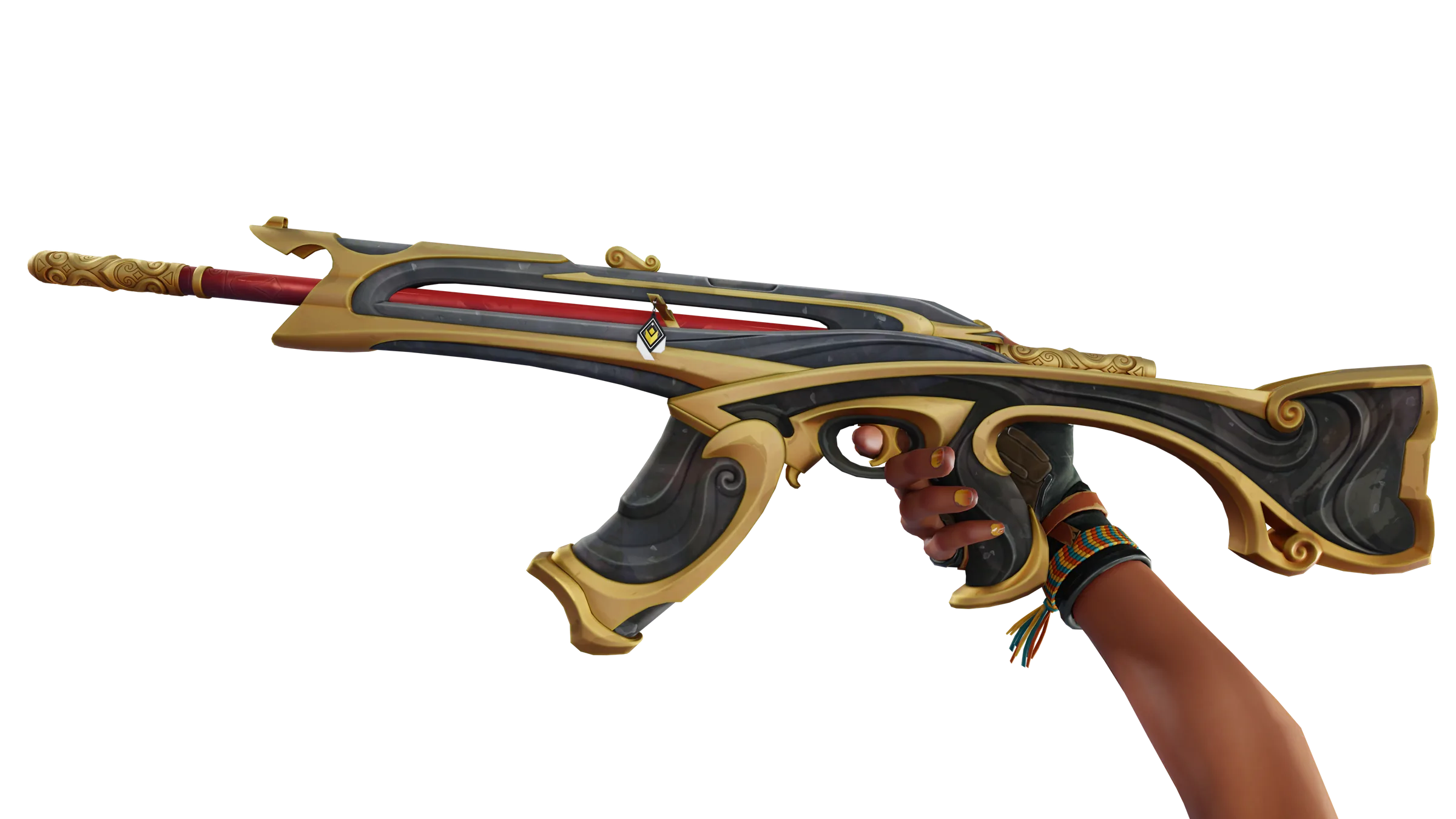
Your tournament goes live like a final
Scoreboard, economy, round ceremonies and operator cards for OBS and vMix. Free and self-hosted — it runs on your machine, over your own public IP. Unbranded from $89 a month.
 ,take it
Take it and make it yours: on the paid tiers nothing on screen says Easy Esports — your tournament is the only brand on air.
Every piece, exactly as it goes to air
Straight browser captures — no renders, no mockups.
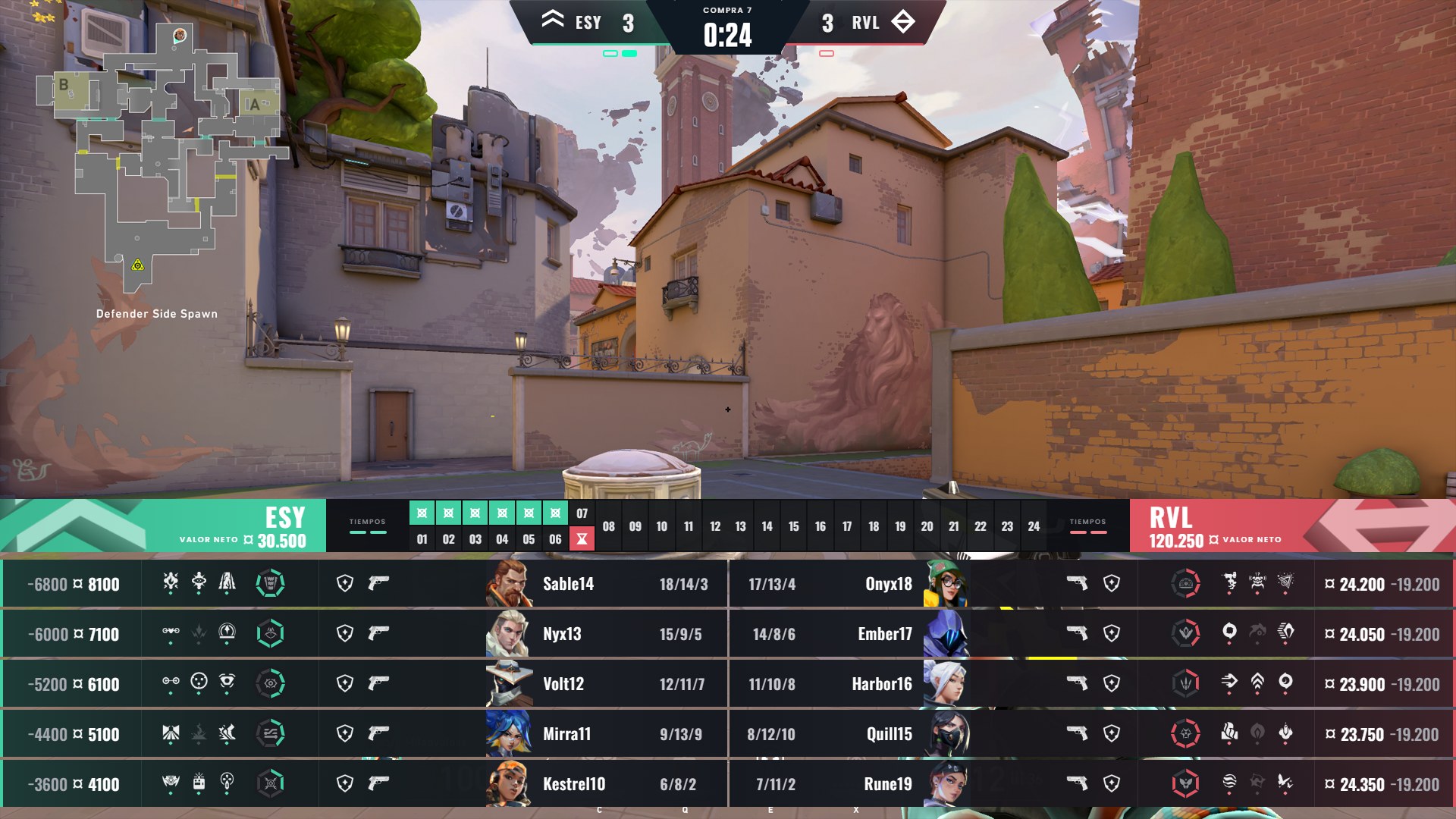
Economy and round history
Credits, loadout and net worth, with every round and how it was won.
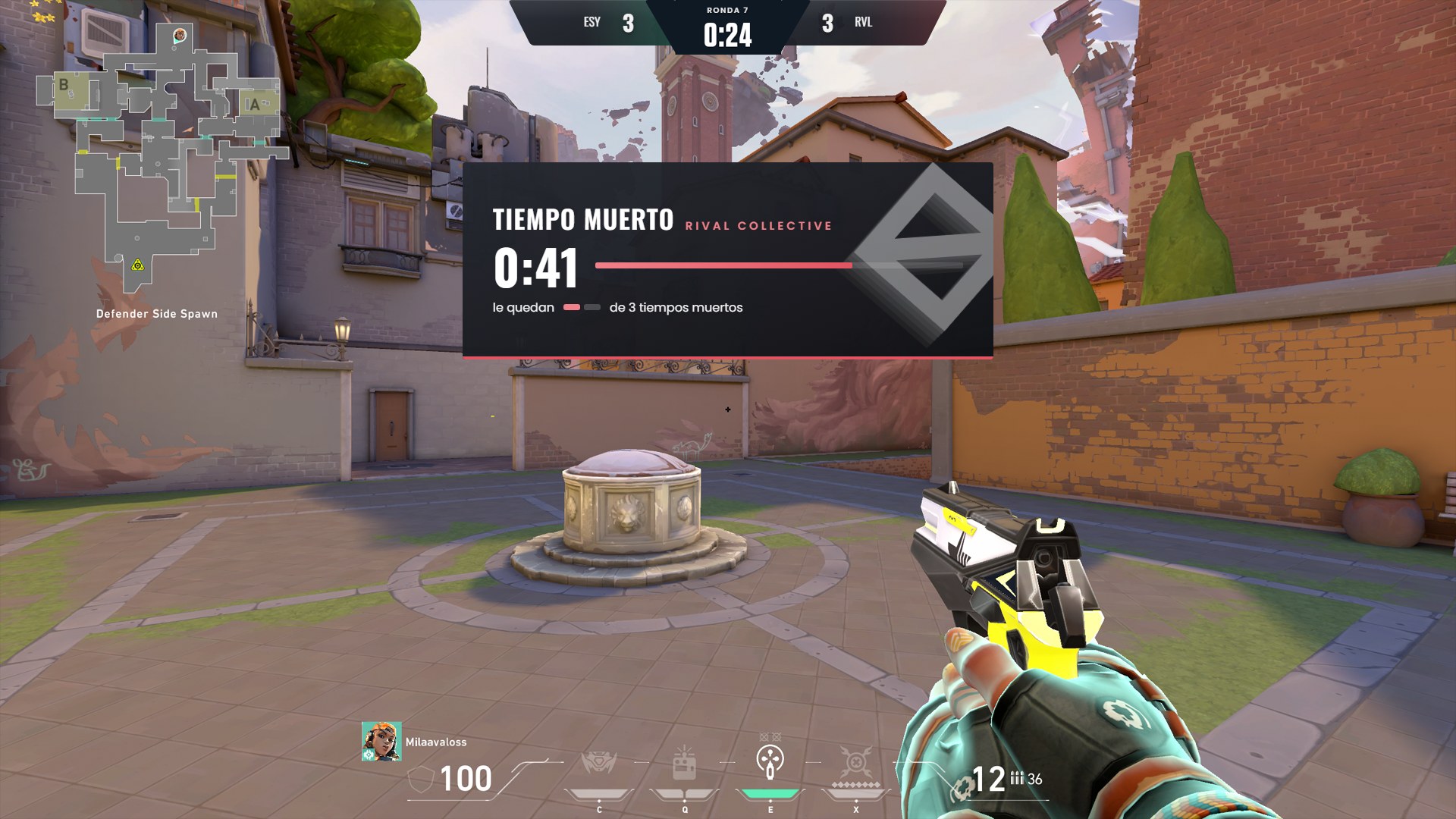
Operator cards
Timeouts, technical pauses and free messages, in and out on your cue.

Map victory
Winner, map and series state when the map closes.
What you see when data is missing
Something always drops mid-series: a player closes the client, a nickname changes half an hour before, the observer has not seen an agent yet. A screen reader answers all of that the same way — it needs a second machine parked on a black background just to be read, and when that machine goes, every number on the board goes with it. Below on the right, every single card is missing something, and all five are still in their places.
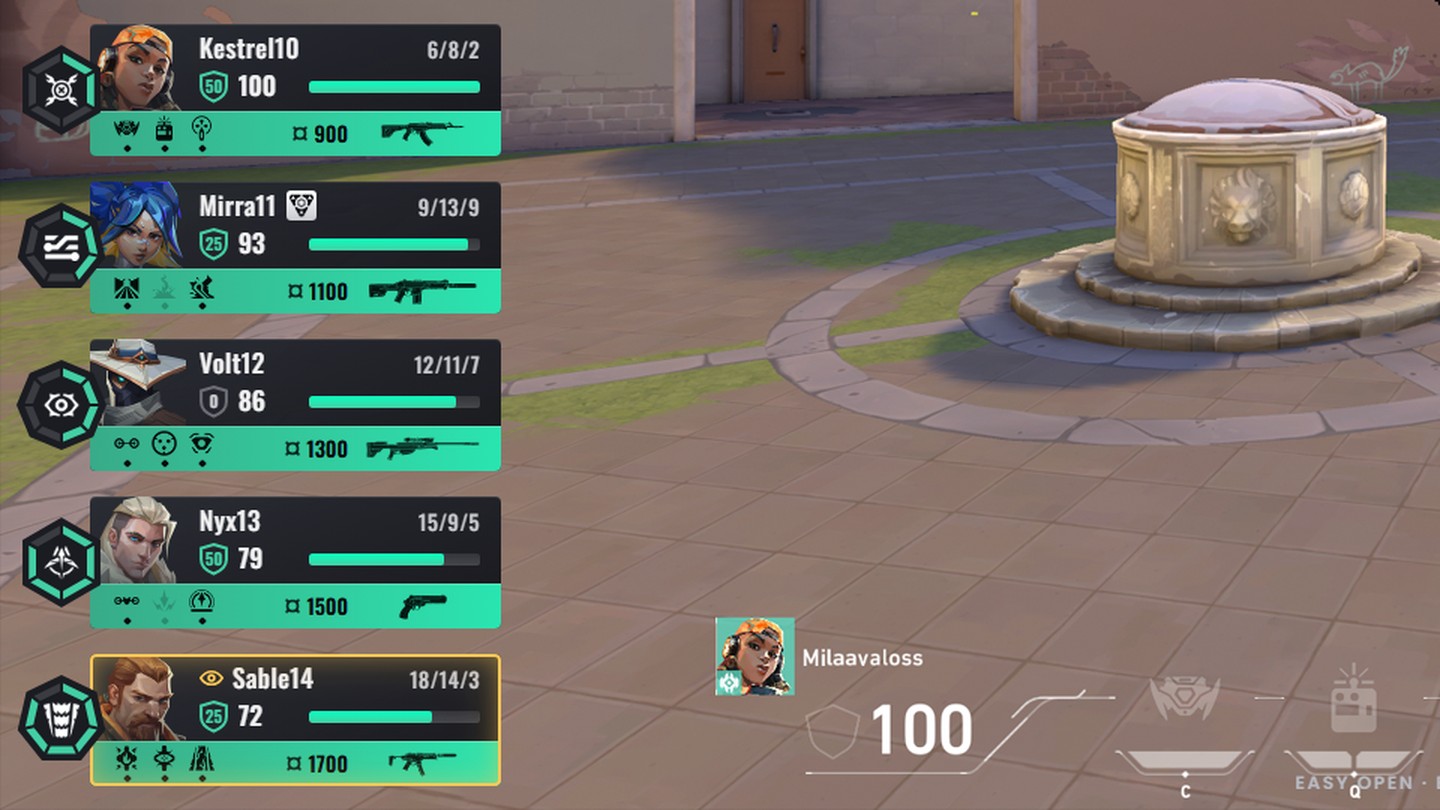
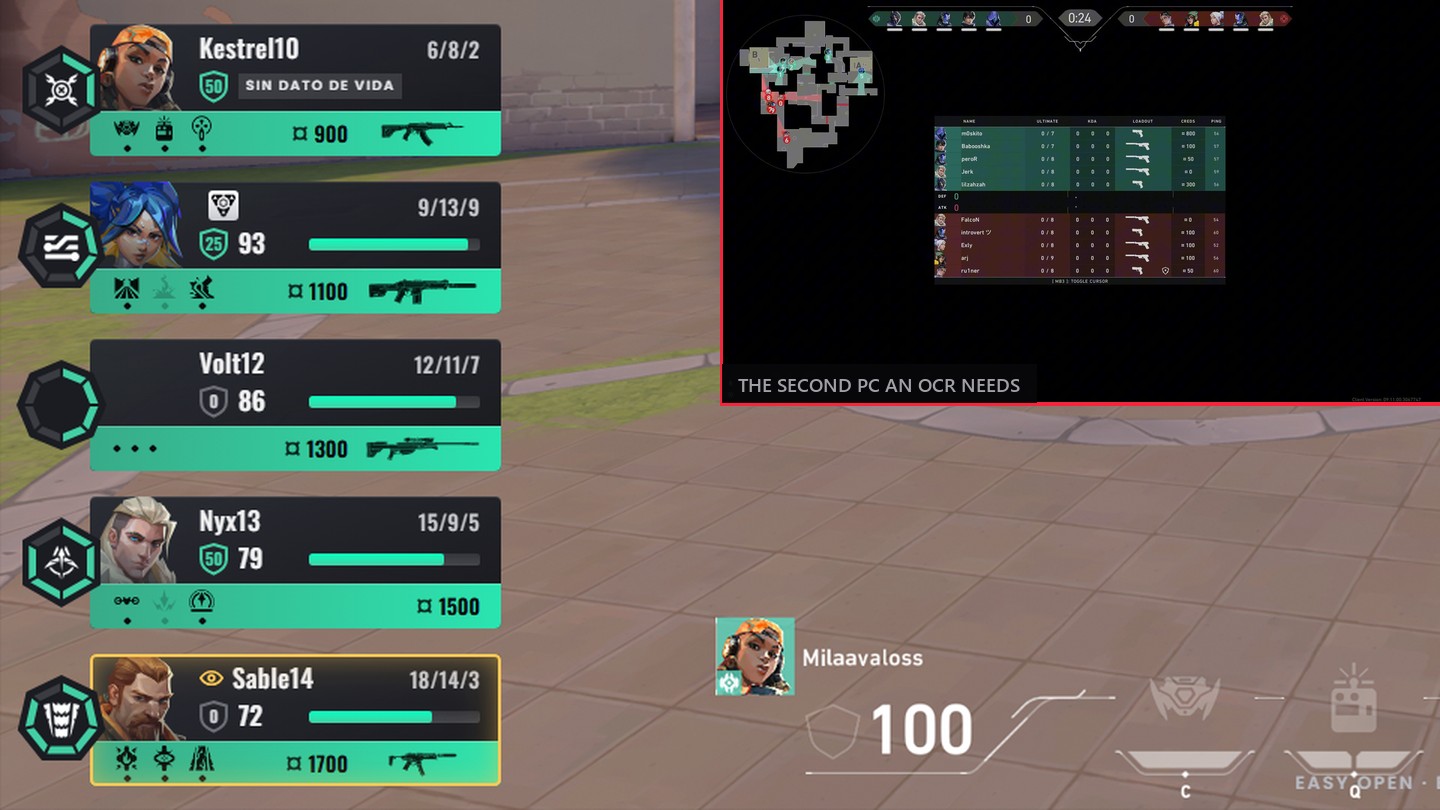
Two PCs, and one of them does nothing. A screen reader needs a spectator client parked on a flat background so the numbers come out clean, plus the machine that actually broadcasts. Two seats, two copies of the game, two things that can drop — and if the reader loses a frame, the scoreboard is wrong until somebody notices and retypes it.
One PC, and it is the one you were using anyway. The observer machine sends the data while it observes, no second seat and nothing typed. Each player’s client adds only that player’s own health, so losing one takes away one figure on one card — and the card says so, instead of showing a number nobody measured.
Dead air is where broadcasts lose people
Designed and not built yet: this is the layout, not a capture. The standby screen will keep the next match, the countdown and your sponsors on air while you reset the lobby, and any transparent render — agent, weapon, your own art — will drop in without the layout moving.
The data comes from the game, not from the screen
Official game events
Easy HUD subscribes to Overwolf’s Game Events Provider, the sanctioned live-data layer for VALORANT. It does not read the game’s memory, inject code into it, or look at the screen.
Nothing is read off pixels
Screen-scraping tools need two or three dedicated machines and someone retyping a name every time the reader gets it wrong. Easy HUD needs one PC and no typing, because the data arrives as data.
Only what a spectator already sees
The observer sends what the spectator client shows. Players opt in by opening a link and send only their own health and abilities — never anyone else’s, never anything the game hides from them.
Never ahead of the broadcast
The operator sets the video delay, so the overlay reaches viewers behind the stream and never in front of it. Nothing on screen can be used to see what a player could not.
Everything stays on the tournament’s own server. The invite a player opens carries a single match token and nothing else — no account, no key, no login. Player data is never resold or redistributed, and agent art is loaded from Riot’s public CDN rather than bundled and shipped.
Two endpoints, and neither one knows who you are
What happens during the round does not come from the web APIs and never will: it arrives as game events through Overwolf, on the observer’s own machine. What we are asking a production key for is naming and health-checking — two endpoints, neither of which returns anything about a specific player. Until the key is granted, agent and map art is read from the community mirror of the public content catalog.
Names and icons, from the source
Agents, maps, weapons and ranks — every label and icon on screen, in the viewer’s language, read from Riot’s own content endpoint and the public content catalog. No name is typed by hand and none is invented.
Knowing it is not our fault
Platform status, so an operator eleven minutes from going live is told the region is down instead of hunting a bug in the overlay. It carries no player data of any kind.
We do not ask Riot who anybody is. No match history, no player statistics, no rank lookup, no account endpoint — not for a player on the broadcast, and not for anyone else. What appears on screen is what the spectator client is already showing to the room, plus what each player’s own client chooses to send about themselves.
The production key stays on the tournament’s own server, reached over HTTPS, and is never shipped inside the client that players install. One key, one product. The overlay itself holds no key at all, which is why it can be a plain browser source in OBS.
Nothing here helps anyone win
Easy HUD is a tool for the person running the broadcast. It draws for the audience, on the observer’s machine, and it is the line between those two things that keeps it fair.
It renders in OBS, never in play
The overlay is a browser source in the broadcast software. It is not drawn over anyone’s game, blocks no part of the map, and a player has nothing of ours on screen while they play.
Behind the stream, by design
The operator sets the broadcast delay and the overlay lands behind it. There is nothing on screen a player could act on, because they see it after the viewers do — if at all.
No looking up an opponent
There is no way to pull up the other team’s history before a match, and none is planned. Players hidden by the game stay hidden: what the game will not tell the spectator client, the overlay does not know.
No odds and no invented rank
No betting or gambling of any kind, and no alternative ranking: no MMR, no ELO, no rating of our own. Official standing, or nothing.
The free tier is free for players and always will be: the client a player installs costs nothing, asks for nothing and shows no advertising. What the paid tiers buy is the organiser’s own branding on the graphics — design work, not access to anybody’s data. Organisers running a community competition are responsible for their own licence with Riot, and the overlay carries the required non-affiliation notice on the broadcast.
Three ways to run it
The free pack carries our watermark. Everything above it is unbranded — the tool is yours and the screen belongs to your tournament.
| Criterion | Easy HUD | Easy Premium Template | Easy Take It (Personalized) |
|---|---|---|---|
| What it is | The free overlay pack, self-hosted | The full tool, unbranded | A template built for your event |
| Price | $0 | $89 / month | By quote |
| Branding on screen | “Developed by Easy Esports” | None | None |
| Templates | Default template | The Easy Premium template | Custom template, assigned to your account |
| Customisation | Team names, tags and logos | Names, tags, logos, sponsor slots, watermark off | Designed to your brief |
| Setup before the first broadcast | ~15 min | ~15 min | Delivered ready to go live |
| Where the data lives | Your machine, over your public IP — never our servers | Your machine, or hosted by us | Your machine, or hosted by us |
| Live changes | Panel, no source restart | Panel, no source restart | Panel, no source restart |
| Behaviour with incomplete data | Documented and visible | Documented and visible | Documented and visible |
| Support | Easy Esports Discord | Dedicated support | Dedicated support + build |
Easy Take It is priced by quote: a custom template designed for your event, plus Easy Premium Template for as long as you broadcast with it. Tell us about your tournament and we’ll send you a quote.
Request your free keyWhere does my tournament data go?
Nowhere near us. The free version is fully self-hosted: panel and overlay run on your own machine and OBS reads them over your public IP, so team names, logos and scores never touch our servers. If you would rather not expose an IP, Easy Premium Template can be hosted by us instead. Match recordings — player names, agents and round stats — are written by your own server, so keeping or deleting them is your call, not ours. Nothing is resold or shared with anyone.
Can I use it in a tournament with sponsors?
Yes, and the tier decides whose name shares the screen. The free pack keeps a small “Developed by Easy Esports” mark; Easy Premium Template and Easy Take It carry no mark of ours at all. Either way the sponsor areas in the scoreboard and on the standby screen are yours.
Does it read match data automatically?
Yes. Map, round, score, the ten players, agents, weapons, shields, credits, ultimates and the spike arrive on their own, read from the game through Overwolf’s Game Events Provider. The panel is there to correct what the game gets wrong and to run timeouts and lower thirds — not to type the scoreboard.
Does it work in vMix or only OBS?
Both, as a browser source at 1920×1080 with a transparent background. Also Streamlabs and any software that accepts a web layer.
Can I change the overlay's typography or layout?
It depends on the tier. On the free pack you change team names, tags, logos and text, and the base layout stays fixed — that is what lets us guarantee it does not break with long names or missing data. Easy Premium Template opens sponsor slots and the module layout, and Easy Take It is drawn to your brief, tested against the same missing-data cases before delivery.
What do the players’ clients send?
Only their own. A player opens an invite link and their client reports that player’s health, abilities and damage — nothing about anyone else, and nothing the game hides from them. The link carries a match token and nothing else: no account, no key, no login. Closing the app stops it.
Can it be used to gain an advantage?
No, and it is built so it cannot. The operator sets a video delay, so what the overlay shows reaches viewers behind the stream rather than ahead of it. Everything on screen is what a spectator already sees, and no player ever receives another player’s data.